
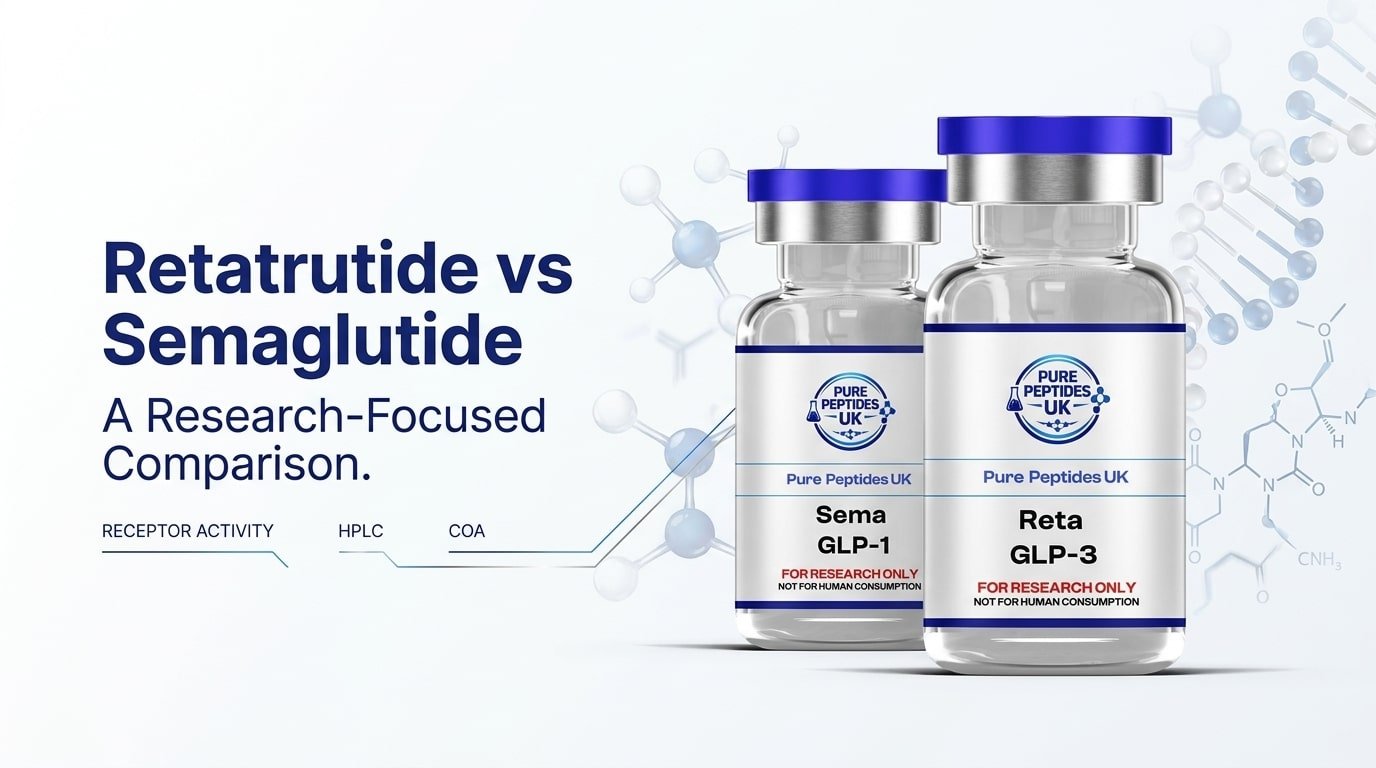
Retatrutide and semaglutide are two closely watched peptide compounds in modern metabolic research, but they have important molecular differences. Retatrutide is being investigated for activity across three hormone receptors, while semaglutide is a selective GLP-1 receptor agonist. For laboratories comparing these compounds, the differences extend beyond their names to receptor activity, molecular design, research applications, analytical testing, and product documentation.
This article provides a research-focused comparison of retatrutide vs semaglutide, including their molecular profiles, receptor targets, laboratory research considerations, and quality documentation.
Research-use disclaimer: The information in this article is provided for research and educational purposes only. Research peptides discussed here are not intended for human or veterinary consumption, diagnosis, treatment, or prevention of disease.
Retatrutide vs Semaglutide at a Glance
| Research characteristic | Retatrutide | Semaglutide |
| Research classification | Investigational peptide compound | Established peptide compound |
| Primary receptor targets | GIP, GLP-1 and glucagon receptors | GLP-1 receptor |
| Receptor activity | Triple agonist | Selective GLP-1 receptor agonist |
| Research focus | Multi-receptor signaling and peptide research | GLP-1 receptor signaling and peptide research |
| Analytical considerations | Identity, purity and peptide characterization | Identity, purity and peptide characterization |
| Research documentation | COA, HPLC and analytical data | COA, HPLC and analytical data |
The central difference is receptor activity. Retatrutide has been described in peer-reviewed research as a single peptide with agonist activity at the GIP, GLP-1, and glucagon receptors. Semaglutide, by contrast, is a GLP-1 analogue that selectively activates the GLP-1 receptor.
What Is Retatrutide in Research?
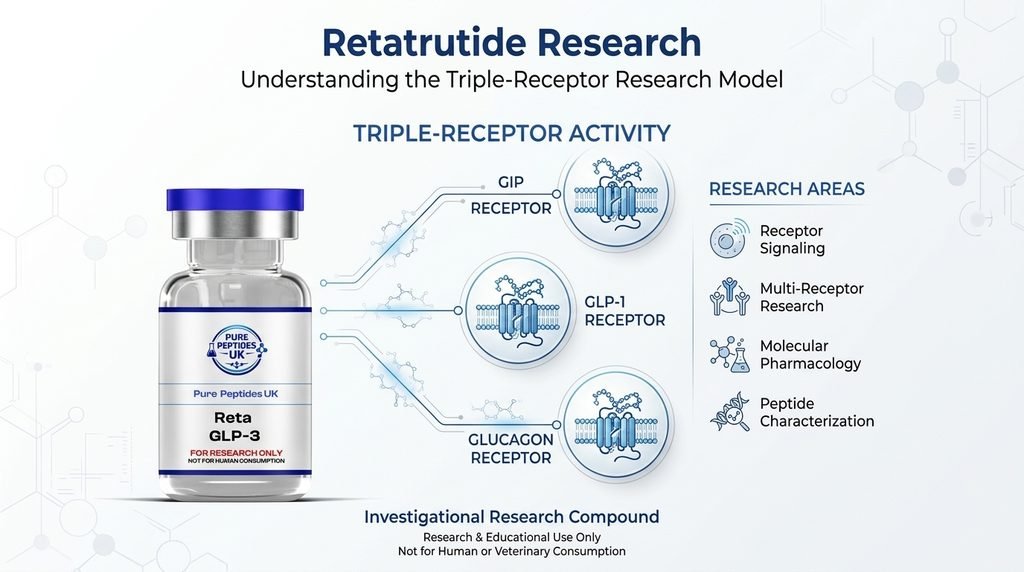
Retatrutide peptide, also known as LY3437943, is an investigational peptide being studied for its activity across three receptor pathways: glucose-dependent insulinotropic polypeptide (GIP), glucagon-like peptide-1 (GLP-1), and glucagon receptors.
This multi-receptor profile is what makes retatrutide particularly relevant to current peptide research. Instead of focusing on a single receptor pathway, researchers can investigate how simultaneous activity across these targets affects biological signaling.
A 2023 Phase 2 study published in the New England Journal of Medicine described retatrutide as a GIP, GLP-1, and glucagon receptor agonist and examined its effects in adults with obesity.
More recent research has moved retatrutide further through clinical development. In 2026, Eli Lilly reported Phase 3 topline results from its TRIUMPH programme, while continuing to describe retatrutide as an investigational triple hormone receptor agonist.
Retatrutide Research Focus
From a laboratory perspective, retatrutide can be relevant to research involving:
- GLP-1 receptor signaling
- GIP receptor signaling
- glucagon receptor activity
- multi-receptor peptide research
- molecular pharmacology
- peptide characterization
- analytical chemistry
- comparative receptor studies
Its three-target profile gives researchers a different molecular model from single-target GLP-1 receptor agonists.
Retatrutide Research Peptide Quality
When evaluating a retatrutide research peptide, researchers may review documentation covering:
- peptide identity
- purity
- batch information
- HPLC analysis
- molecular mass
- analytical methodology
- Certificate of Analysis (COA)
These records are useful when assessing whether the material supplied is consistent with its stated specifications.
What Is Semaglutide in Research?
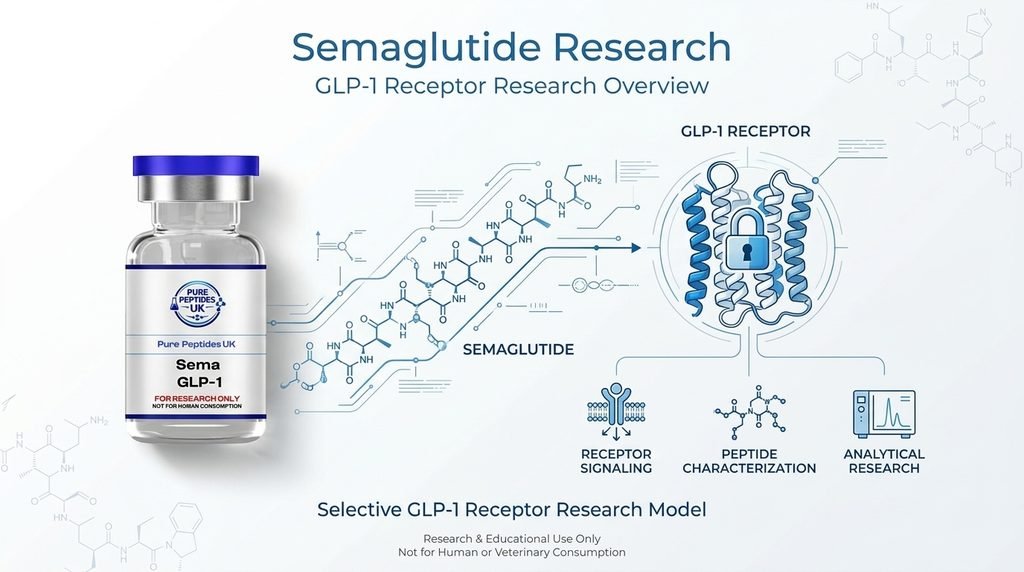
Semaglutide is a peptide analogue of human GLP-1 and acts as a selective GLP-1 receptor agonist. The FDA prescribing information describes semaglutide as having 94% sequence homology to human GLP-1 and explains that it selectively binds to and activates the GLP-1 receptor.
Semaglutide has been extensively studied, giving researchers a substantial body of published scientific literature for comparison and reference.
In the UK, semaglutide peptide is also an active pharmaceutical ingredient associated with licensed medicines. The MHRA lists semaglutide among licensed GLP-1 medicines, including products such as Wegovy, Ozempic and Rybelsus. This regulatory status applies to authorised medicines and should not be confused with research-only peptide products.
Semaglutide Research Focus
Laboratory research involving semaglutide can include:
- GLP-1 receptor studies
- peptide characterization
- molecular pharmacology
- analytical chemistry
- receptor-signaling research
- comparative peptide research
- stability and identity investigations
Because semaglutide has been extensively characterized, it can also provide a useful reference compound when researchers are examining GLP-1-related peptide activity.
Retatrutide vs Semaglutide: Molecular Differences
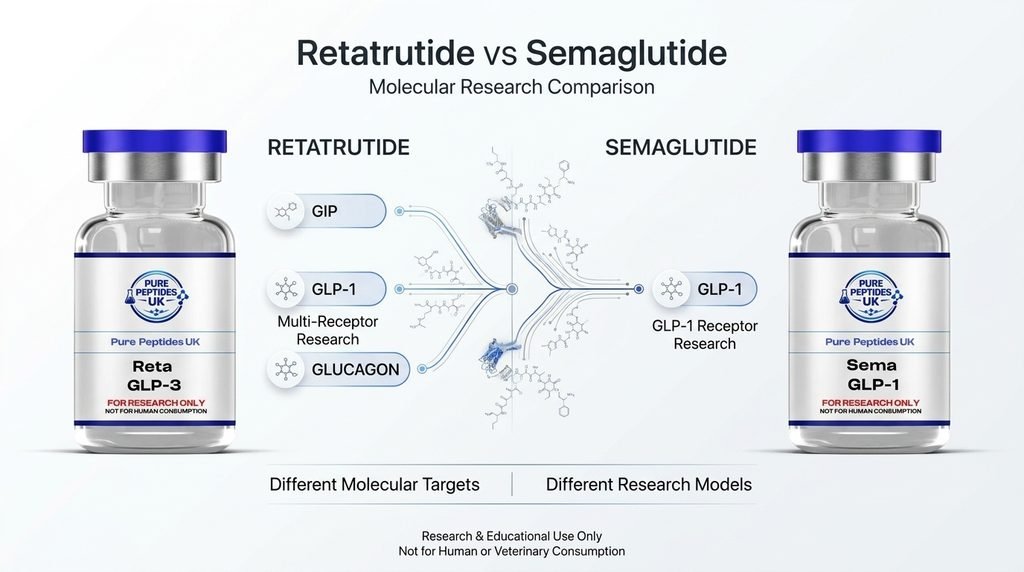
The most important difference between retatrutide and semaglutide is their receptor-targeting profile.
Retatrutide Targets Three Receptors
Retatrutide has agonist activity at:
- GIP receptors
- GLP-1 receptors
- glucagon receptors
This is why it is commonly described as a triple agonist.
The 2023 Phase 2 publication identified retatrutide as a GIP-GLP-1-glucagon receptor agonist and discussed its distinct multi-receptor design.
Semaglutide Targets the GLP-1 Receptor
Semaglutide has a more focused receptor profile. It is a GLP-1 analogue designed to activate the GLP-1 receptor. The FDA label describes selective binding and activation of the GLP-1 receptor.
For research purposes, this creates a clear distinction:
Retatrutide: multi-receptor research model.
Semaglutide: GLP-1 receptor research model.
Neither description means that one compound is universally preferable. The relevant choice depends on the scientific question being investigated.
Retatrutide vs Semaglutide: Research Applications
The two compounds can appear in overlapping areas of peptide research, but their receptor profiles create different research opportunities.
| Research area | Retatrutide | Semaglutide |
| GLP-1 receptor research | Yes | Yes |
| GIP receptor research | Yes | No |
| Glucagon receptor research | Yes | No |
| Multi-receptor signaling | Yes | Limited |
| Peptide characterization | Yes | Yes |
| Analytical testing | Yes | Yes |
| Comparative peptide research | Yes | Yes |
Researchers interested specifically in GLP-1 receptor activity may examine both compounds, whereas studies focused on combined GIP, GLP-1, and glucagon receptor activity have a different research model with retatrutide.
Retatrutide vs Semaglutide: Purity and Analytical Testing
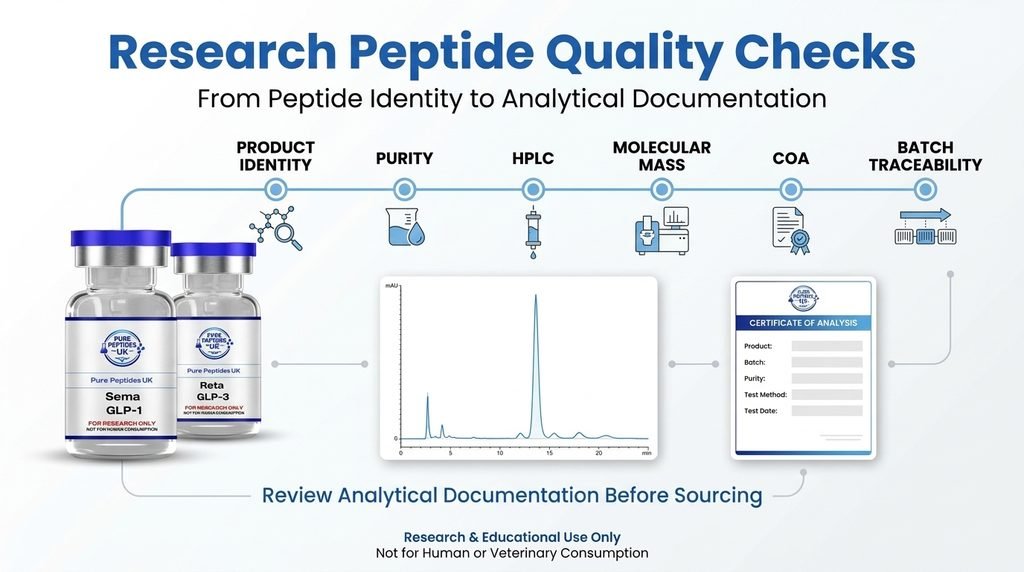
Scientific results depend heavily on the quality and identity of the material being examined. For that reason, peptide purity testing is an important consideration when sourcing research compounds.
HPLC Testing
High-performance liquid chromatography (HPLC) is commonly used for analytical characterization of peptide materials.
For a research peptide, HPLC data can provide information about chromatographic purity and help researchers assess whether the material corresponds with the stated specification.
A useful analytical record should identify the compound and provide sufficient information to understand what was tested and how the reported result was obtained.
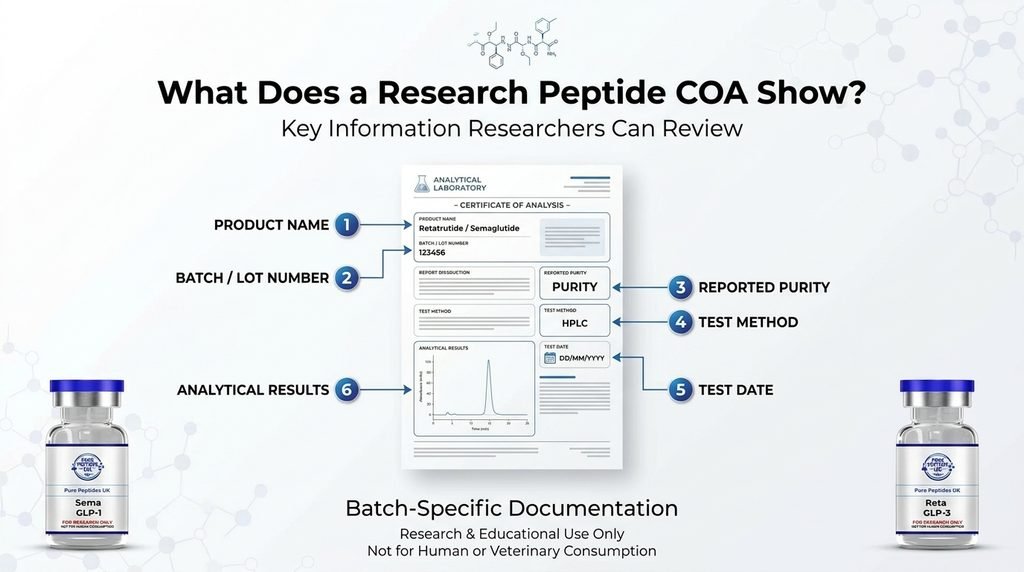
COA Documentation
A Certificate of Analysis can provide batch-specific information about a research peptide.
Depending on the supplier and testing programme, a COA may include:
- product name
- batch or lot number
- reported purity
- testing method
- test date
- analytical results
- laboratory information
Researchers comparing retatrutide research peptides or semaglutide research peptides should review the available documentation rather than relying only on a product description.
LC-MS and Additional Characterization
Mass spectrometry can provide additional information about molecular mass and identity. In combination with chromatographic methods, analytical techniques can provide a more complete picture of a peptide material.
The exact analytical requirements depend on the research application and the level of characterization required.
Retatrutide vs Semaglutide Research Peptides in the UK
Researchers searching for research peptides UK, retatrutide peptide UK, or semaglutide peptide UK should pay attention to more than product names.
Important sourcing considerations can include:
- clear research-use-only labeling
- peptide identity
- purity information
- HPLC documentation
- COA availability
- batch identification
- analytical transparency
- appropriate product labeling
- supplier information
This is particularly important because the UK regulatory environment distinguishes authorised medicines from unlicensed products and research materials.
The MHRA states that semaglutide is among the licensed GLP-1 medicines available in the UK. It has also warned about the promotion and supply of unlicensed medicines and has taken enforcement action involving unlicensed products described as retatrutide and other peptides.
For that reason, research-product sourcing should not be confused with sourcing authorised medicines.
How to Evaluate Retatrutide and Semaglutide Research Peptide Quality
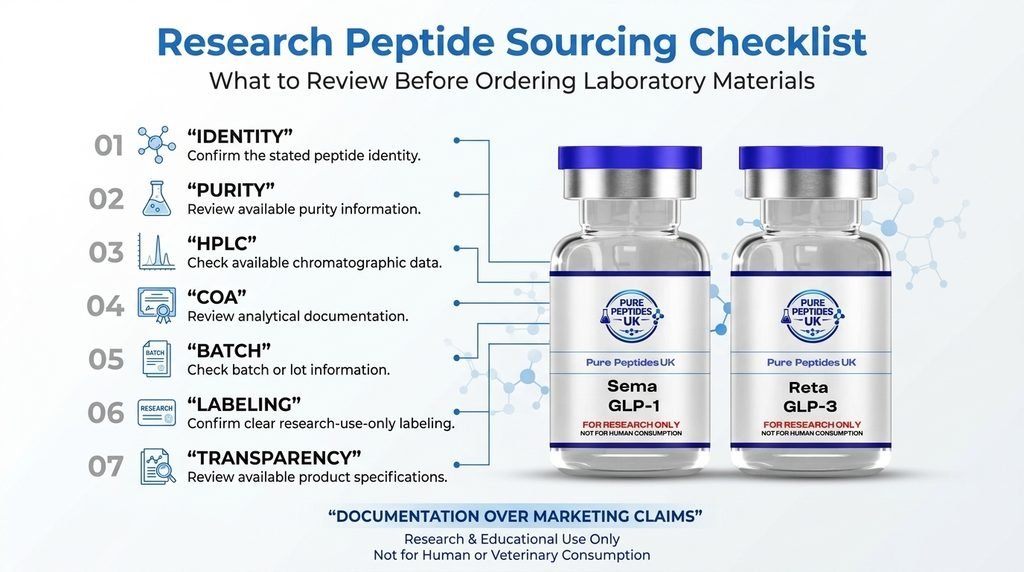
Whether you are comparing a retatrutide research peptide or a semaglutide research peptide, the same basic documentation principles can help.
1. Verify Peptide Identity
Check that the product name and documentation consistently identify the intended compound.
2. Review Purity Information
Look for a clearly reported analytical purity result and understand which testing method was used.
3. Check HPLC Data
Where available, review chromatographic information rather than relying solely on a headline purity percentage.
4. Review the COA
The Certificate of Analysis should correspond to the relevant product or batch and contain meaningful analytical information.
5. Check Batch Information
Batch or lot identification makes analytical documentation easier to trace.
6. Look for Clear Research-Use Labeling
Research peptides should be clearly distinguished from authorised pharmaceutical products.
7. Evaluate Supplier Transparency
A research peptide supplier should provide enough product and analytical information for researchers to understand what they are sourcing.
Retatrutide vs Semaglutide: Which Is Relevant to Research?
There is no universal answer because the two peptides represent different research models.
Retatrutide is particularly relevant when the research question involves GIP, GLP-1, glucagon, or multi-receptor activity.
Semaglutide is particularly relevant when the research question centres on GLP-1 receptor activity and semaglutide-specific molecular characteristics.
The distinction is therefore best understood through the research target rather than through a simple “which is better” comparison.
Current Retatrutide Research Status
Retatrutide has progressed considerably since its early clinical studies. The 2023 Phase 2 trial established substantial scientific interest in its triple-receptor mechanism, while 2026 Phase 3 reports from Eli Lilly have provided additional investigational data.
However, current research progress should not be confused with regulatory approval.
Eli Lilly’s current retatrutide information states that the compound has not been approved by a regulatory agency.
That distinction is important for anyone researching retatrutide peptide, particularly in the UK market.
Current Semaglutide Research Status
Semaglutide has a much longer research and regulatory history. It is a well-characterized GLP-1 receptor agonist, and semaglutide-containing medicines are licensed in the UK for specified medical uses.
For laboratory research, however, the regulatory status of a pharmaceutical medicine does not automatically change the intended use of a separately supplied research material.
Researchers should therefore assess the specific product, its labeling, specifications, and analytical documentation.
Sourcing Research Peptides from Pure Peptides UK
For researchers looking for UK research peptides, Pure Peptides UK provides a dedicated research-focused catalogue covering peptide compounds including retatrutide, semaglutide, and other research materials.
When reviewing a research peptide product, researchers can consider the available specifications, analytical documentation, batch information, and research-use labeling before making a sourcing decision.
All products discussed in the research context of this article are intended strictly for laboratory and educational research and are not intended for human or veterinary consumption.
Frequently Asked Questions
What is the difference between Retatrutide and Semaglutide?
The primary molecular difference is receptor activity. Retatrutide is an investigational triple agonist targeting GIP, GLP-1, and glucagon receptors, while semaglutide is a GLP-1 receptor agonist.
Is Retatrutide the same as Semaglutide?
No. They are different peptide compounds with different molecular structures and receptor-targeting profiles.
What receptors does Retatrutide target?
Retatrutide has agonist activity at the GIP, GLP-1, and glucagon receptors.
What receptor does Semaglutide target?
Semaglutide selectively binds to and activates the GLP-1 receptor.
Is Retatrutide still investigational?
Yes. As of 2026, retatrutide remains an investigational compound. Eli Lilly’s current information states that it has not been approved by a regulatory agency.
What should researchers look for when sourcing Retatrutide research peptide?
Researchers can review peptide identity, reported purity, HPLC data, COA documentation, batch information, analytical testing, and clear research-use-only labeling.
What should a Semaglutide peptide COA contain?
A COA may include product identification, batch information, reported purity, testing methodology, testing date, and analytical results. The exact contents vary between suppliers and testing laboratories.
Can researchers source Retatrutide research peptide in the UK?
Research materials may be available from UK-focused research peptide suppliers, but researchers should distinguish research materials from licensed medicines and carefully review product labeling and analytical documentation.
Can researchers source Semaglutide research peptide in the UK?
Research-focused suppliers may offer semaglutide-labelled research materials. Researchers should assess the specific product documentation and intended-use labeling rather than assuming that a research product is equivalent to an authorised medicine.
Final Takeaway
Retatrutide vs semaglutide is ultimately a comparison between two different peptide research models.
Retatrutide is an investigational GIP, GLP-1, and glucagon receptor triple agonist, making it particularly relevant to multi-receptor research. Semaglutide is a well-characterized GLP-1 receptor agonist, making it relevant to research focused on GLP-1 receptor activity.
For laboratories evaluating either compound, receptor profile is only one consideration. Peptide identity, purity, HPLC results, COA documentation, batch information, and supplier transparency are also important when assessing research materials.
The regulatory distinction is equally important. Semaglutide is associated with licensed medicines in the UK, whereas retatrutide remains investigational. Research materials should therefore be evaluated according to their specific labeling, documentation, and intended research purpose.
Research-use only. Not for human or veterinary consumption.