

Semaglutide has become one of the most widely discussed research peptides in modern biomedical science. While it was initially developed as a glucagon-like peptide-1 (GLP-1) receptor agonist, ongoing scientific investigations continue to uncover new areas where this peptide may influence metabolic regulation, cardiovascular biology, kidney function, liver health, and other physiological processes. As a result, laboratories, universities, and pharmaceutical companies remain actively involved in expanding semaglutide research.
For researchers, keeping up with the latest semaglutide studies is essential for understanding emerging scientific evidence, identifying new research directions, and evaluating how this peptide compares with newer compounds such as Tirzepatide and Retatrutide. Every year, peer-reviewed publications provide deeper insights into semaglutide’s molecular mechanisms, safety profile, and long-term research potential.
This article explores the latest semaglutide research, highlights significant scientific developments, and explains why semaglutide continues to be a major focus in peptide science. Whether you are interested in metabolic research, GLP-1 receptor agonists, or research-grade peptides, this guide provides an overview of the most important findings researchers should know.
Research Use Only (RUO) Notice: The information in this article is provided for educational and scientific purposes only. Research peptides are intended exclusively for laboratory research and are not approved for human consumption.
What Is Semaglutide?
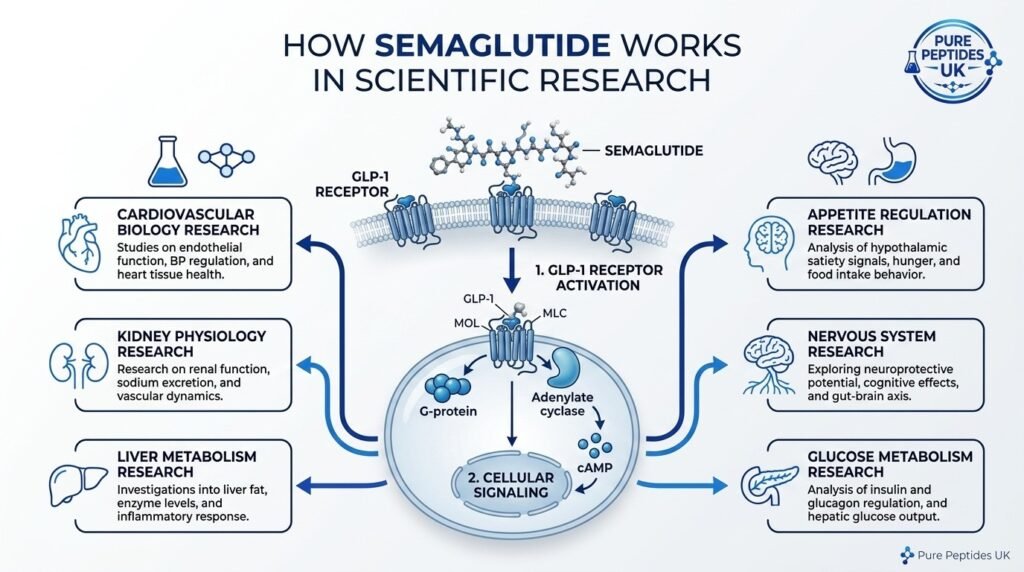
Semaglutide is a synthetic peptide analogue designed to mimic the activity of the naturally occurring glucagon-like peptide-1 (GLP-1), a hormone involved in regulating glucose metabolism and energy balance. By interacting with GLP-1 receptors, semaglutide has become an important molecule for studying metabolic pathways, endocrine function, and peptide receptor signaling.
From a scientific perspective, semaglutide offers researchers an opportunity to investigate how GLP-1 receptor activation influences numerous biological systems beyond glucose regulation. This has led to extensive laboratory studies examining cardiovascular biology, obesity-related mechanisms, inflammatory pathways, kidney physiology, liver metabolism, and neurological functions.
Today, semaglutide research extends far beyond its original scope. Scientists continue to explore its molecular interactions, pharmacokinetics, receptor selectivity, and long-term biological effects across multiple experimental models.
Key Characteristics of Semaglutide
- Synthetic GLP-1 receptor agonist
- Long-acting peptide analogue
- Commonly studied in metabolic and endocrine research
- Investigated in cardiovascular and renal research
- Frequently used in obesity and energy metabolism studies
- Subject of numerous peer-reviewed scientific publications worldwide
Its broad research applications have made semaglutide one of the most extensively investigated peptides in modern biomedical science.
Why Semaglutide Continues to Attract Scientific Interest
Few research peptides have generated as much scientific attention as semaglutide over the past several years. The combination of promising biological activity and expanding research applications has encouraged academic institutions, biotechnology companies, and pharmaceutical organizations to continue investing in large-scale studies.
Several factors explain this sustained interest.
Expanding Research Beyond Metabolic Studies
While semaglutide first gained attention for metabolic research, scientists are now exploring how GLP-1 receptor activation may influence multiple organ systems. Current investigations include cardiovascular function, kidney biology, liver disease, neurodegenerative disorders, inflammation, and cellular signaling pathways.
This broader research scope has significantly increased the number of publications focusing on semaglutide.
Increasing Number of Clinical and Preclinical Studies
Research databases continue to publish new findings every year. Scientists are conducting randomized clinical trials, observational studies, laboratory experiments, and systematic reviews to better understand semaglutide’s biological mechanisms.
These studies provide valuable information regarding:
- Receptor activation
- Molecular signaling pathways
- Pharmacokinetics
- Long-term biological effects
- Safety observations
- Comparative peptide performance
Interest in Next-Generation GLP-1 Research
Semaglutide also serves as a benchmark when evaluating newer peptide therapies. Researchers frequently compare semaglutide with compounds such as Tirzepatide and Retatrutide to better understand differences in receptor activity, biological responses, and potential research applications.
These comparative studies continue to shape the future of GLP-1 receptor agonist research.
Latest Semaglutide Studies Published in Recent Years
The pace of semaglutide research has accelerated considerably, with numerous peer-reviewed publications investigating both established and emerging areas of interest. Rather than focusing on a single biological system, recent studies examine how GLP-1 receptor activation may influence multiple interconnected physiological processes.
Below are some of the major research areas attracting scientific attention.
Cardiovascular Outcome Research
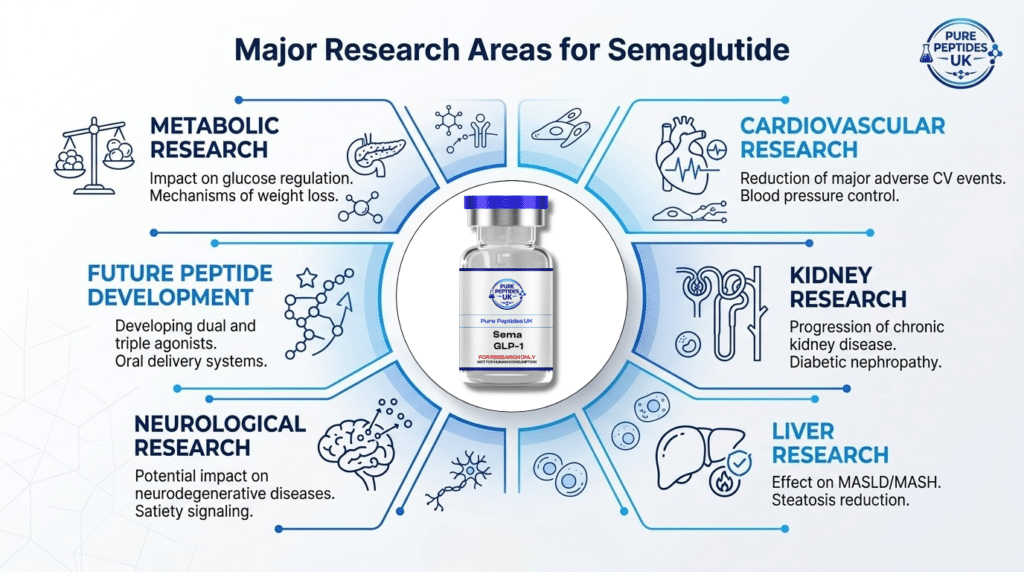
One of the strongest areas of evidence involves cardiovascular research. Scientists continue to investigate how semaglutide affects cardiovascular risk factors, vascular biology, endothelial function, and inflammatory processes.
Recent studies have explored:
- Cardiovascular event outcomes
- Blood vessel function
- Cardiac inflammation
- Endothelial health
- Long-term cardiovascular safety
- Risk reduction mechanisms
These findings have encouraged additional research into the biological pathways connecting GLP-1 receptor activation with cardiovascular physiology.
Kidney Function Research
Researchers are increasingly studying semaglutide’s relationship with renal physiology and chronic kidney disease. Laboratory investigations seek to understand how peptide signaling influences kidney tissue, filtration mechanisms, inflammatory responses, and metabolic regulation.
Recent scientific literature has examined:
- Kidney function biomarkers
- Renal inflammation
- Glomerular physiology
- Cellular stress responses
- Long-term kidney outcomes
- Protective biological pathways
Although research continues to evolve, this area has become one of the fastest-growing fields within semaglutide science.
Liver and Metabolic Disease Research
Another rapidly expanding field involves liver metabolism. Scientists are investigating whether GLP-1 receptor activation influences fat accumulation, inflammation, and metabolic pathways associated with liver disorders.
Current laboratory research includes studies involving:
- Metabolic dysfunction-associated steatotic liver disease (MASH)
- Non-alcoholic fatty liver disease (NAFLD)
- Hepatic inflammation
- Lipid metabolism
- Insulin signaling
- Energy regulation
These investigations continue to improve scientific understanding of metabolic physiology and peptide-based mechanisms.
Neurological Research
Researchers are also exploring whether GLP-1 receptors play a role in neurological biology. Early-stage studies examine how semaglutide may influence neuroinflammation, neuronal signaling, oxidative stress, and cognitive function.
Current areas of investigation include:
- Brain energy metabolism
- Neuroprotective pathways
- Cognitive biology
- Cellular signaling
- Inflammatory biomarkers
- Central nervous system physiology
While much of this research remains in its early stages, it represents one of the most promising frontiers in peptide science.
What Makes Recent Semaglutide Research Different?
The newest wave of semaglutide studies differs from earlier research in several important ways. Instead of examining only glucose metabolism, modern investigations take a broader systems biology approach, evaluating how GLP-1 receptor signaling interacts with multiple organs and molecular pathways simultaneously.
Researchers now incorporate advanced technologies such as:
- Artificial intelligence-assisted drug discovery
- Multi-omics analysis
- Biomarker profiling
- High-resolution molecular imaging
- Genomic sequencing
- Proteomics
- Machine learning-based data analysis
These technologies allow scientists to identify complex biological interactions that were previously difficult to observe.
As a result, semaglutide continues to generate new scientific hypotheses and research opportunities across numerous biomedical disciplines.
What Recent Meta-Analyses Reveal About Semaglutide Research
Individual studies provide valuable insights, but systematic reviews and meta-analyses offer a broader perspective by evaluating data from multiple research projects. These analyses help researchers identify consistent trends, compare outcomes across different populations, and highlight areas where further investigation is needed.
Recent meta-analyses continue to support the growing scientific interest in semaglutide while also identifying unanswered questions that require long-term research.
Consistent Findings Across Multiple Studies
Several comprehensive reviews have reported recurring themes throughout semaglutide research, including:
- Continued interest in GLP-1 receptor signaling pathways
- Extensive investigation into metabolic regulation
- Growing evidence supporting cardiovascular research
- Increased focus on kidney and liver biology
- Expanding research involving inflammation and cellular metabolism
- Greater emphasis on long-term observational data
These recurring findings demonstrate why semaglutide remains one of the most actively studied research peptides worldwide.
Areas That Still Require Further Investigation
Despite the increasing volume of published literature, researchers acknowledge that several topics deserve additional study.
Current priorities include:
- Long-term biological responses over multiple years
- Comparative research involving newer GLP-1 receptor agonists
- Biomarker identification for personalized research models
- Combination peptide research
- Mechanisms involved in multi-organ signaling
- Differences observed across diverse research populations
As additional studies become available, these questions will likely shape future scientific investigations.
Emerging Research Areas Beyond Metabolic Science
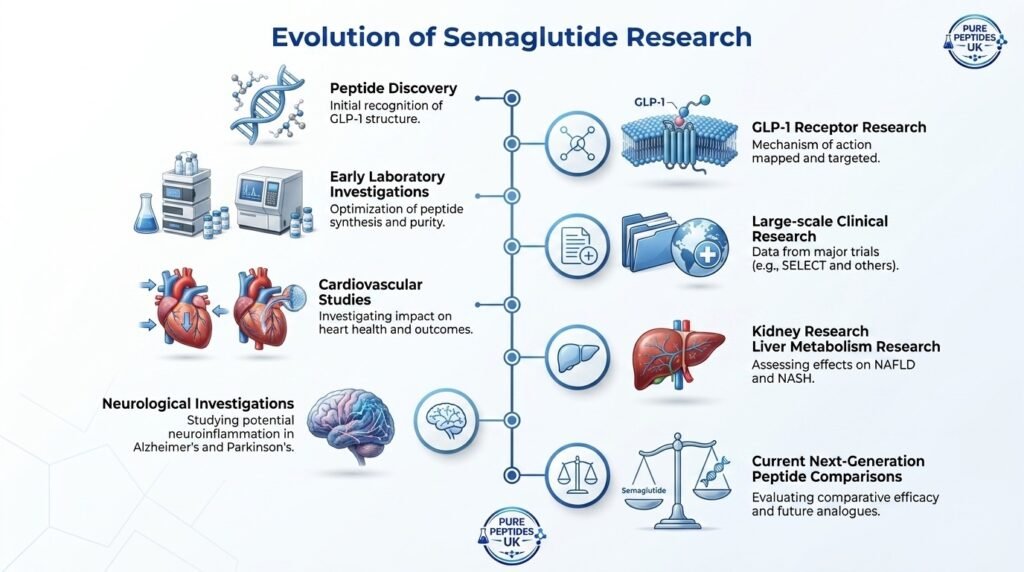
Although semaglutide is widely recognized for metabolic research, scientists are increasingly exploring its biological effects in several new disciplines. Advances in molecular biology and peptide pharmacology have opened opportunities to investigate how GLP-1 receptor activation may influence numerous physiological systems.
Cardiometabolic Biology
Researchers continue examining the relationship between metabolism and cardiovascular physiology.
Current investigations include:
- Vascular inflammation
- Endothelial function
- Lipid metabolism
- Blood vessel biology
- Cellular energy regulation
These studies aim to better understand the complex interactions between metabolic pathways and cardiovascular health.
Liver Research
Scientific interest in liver biology has expanded significantly over the past few years.
Laboratory investigations now explore:
- Hepatic fat metabolism
- Cellular inflammation
- Fibrosis-related pathways
- Oxidative stress
- Mitochondrial function
- Energy homeostasis
This growing body of research reflects the importance of liver function in overall metabolic regulation.
Kidney Research
Another rapidly developing field involves renal physiology.
Researchers continue studying:
- Kidney tissue signaling
- Filtration mechanisms
- Cellular repair pathways
- Oxidative stress responses
- Inflammatory biomarkers
- Long-term renal physiology
These studies contribute to a broader understanding of how peptide signaling influences kidney function.
Neurological Research
Neuroscience has become another promising area of semaglutide investigation.
Scientists are currently evaluating:
- Brain energy metabolism
- Neuroinflammation
- Cognitive pathways
- Neuronal signaling
- Synaptic communication
- Oxidative stress regulation
Although much of this work remains in the research phase, early findings continue to generate interest within neuroscience laboratories.
Semaglutide vs. Newer Research Peptides
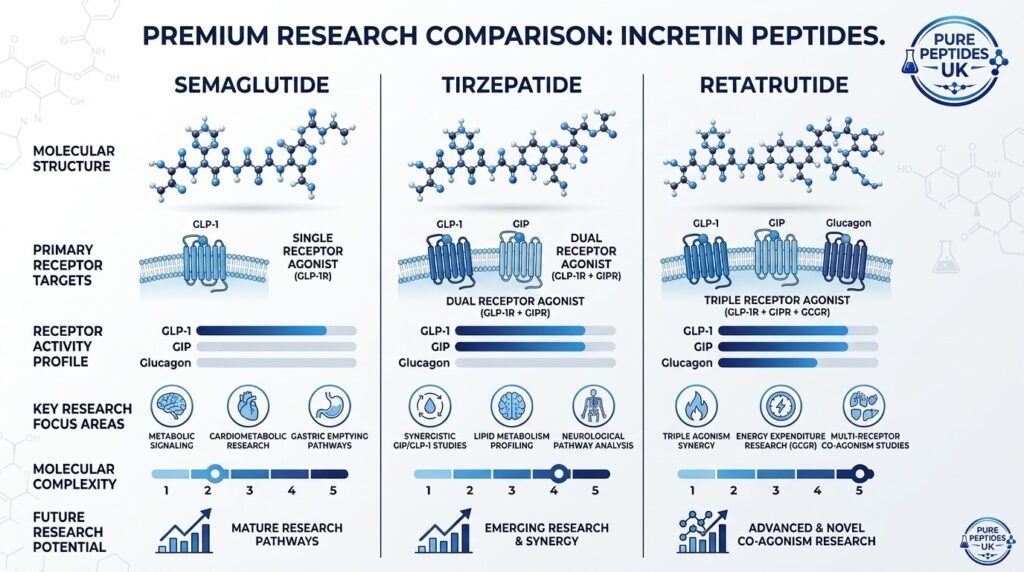
As peptide science evolves, researchers frequently compare semaglutide with newer compounds to better understand differences in receptor activity and biological mechanisms.
Two peptides that are commonly evaluated alongside semaglutide are Tirzepatide and Retatrutide.
| Feature | Semaglutide | Tirzepatide | Retatrutide |
| Primary Research Target | GLP-1 receptor | GLP-1 + GIP receptors | GLP-1 + GIP + Glucagon receptors |
| Research Focus | Metabolic biology | Dual receptor biology | Triple receptor biology |
| Scientific Interest | Extensive | Rapidly growing | Emerging |
| Published Literature | Extensive | Increasing | Early-stage expansion |
These comparisons help researchers understand how receptor selectivity may influence biological pathways and experimental outcomes.
If you’re interested in learning more about newer multi-receptor peptides, you may also enjoy our guide on Retatrutide Peptide UK: Research Overview & Legal Status.
Important Findings Researchers Should Watch
Every year, new publications reveal trends that influence future peptide research. Researchers following semaglutide should pay close attention to several developing areas.
Long-Term Research Data
Long-duration studies continue to provide valuable information about biological responses over extended observation periods.
Researchers are monitoring:
- Cellular adaptations
- Receptor responsiveness
- Metabolic regulation
- Long-term physiological observations
Real-World Research Evidence
Beyond controlled laboratory environments, observational research continues to provide additional insights into peptide biology.
These studies help researchers understand how findings translate across broader populations and diverse research settings.
Combination Peptide Research
Scientists are increasingly interested in studying semaglutide alongside other investigational peptides.
Areas of interest include:
- Multi-receptor activation
- Complementary signaling pathways
- Comparative peptide biology
- Combination research strategies
This field continues to expand as new peptide analogues enter scientific investigation.
Biomarker Discovery
Modern peptide research increasingly relies on biomarkers to better understand molecular responses.
Researchers continue investigating:
- Genetic markers
- Protein expression
- Cellular signaling molecules
- Inflammatory indicators
- Metabolic biomarkers
Improved biomarker identification may help future researchers design more targeted experimental models.
Future Directions of Semaglutide Research
The future of semaglutide research extends well beyond current investigations. Advances in biotechnology, artificial intelligence, molecular biology, and precision medicine continue creating new opportunities for peptide science.
Several emerging trends are expected to shape future research.
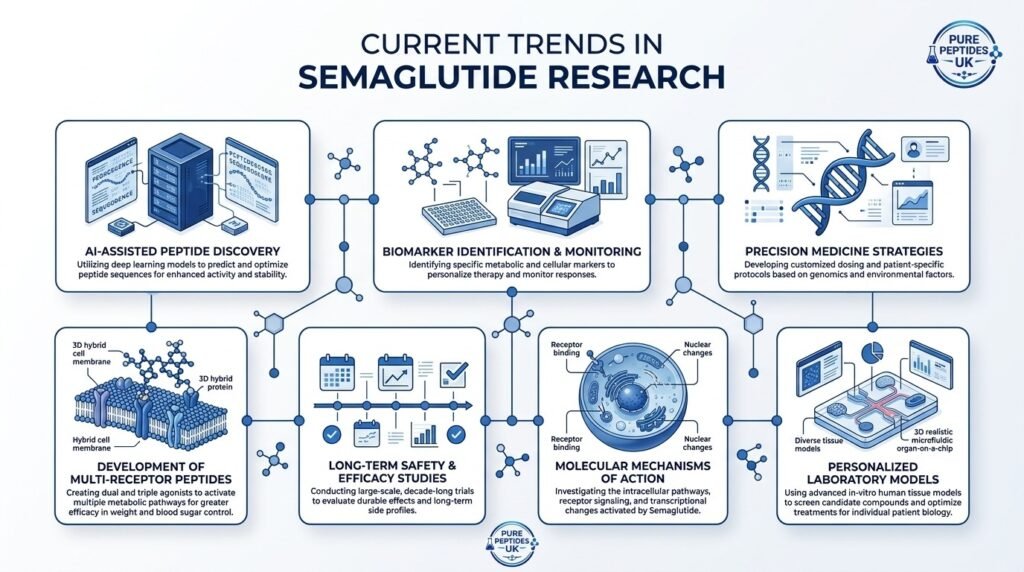
Artificial Intelligence in Peptide Discovery
Machine learning algorithms now assist researchers by:
- Predicting peptide interactions
- Identifying molecular targets
- Accelerating drug discovery
- Optimizing experimental design
- Analyzing complex biological datasets
AI-driven research is becoming an increasingly valuable tool in peptide development.
Personalized Research Models
Researchers are moving toward more individualized biological models that account for genetic, metabolic, and molecular differences.
Future investigations may incorporate:
- Genomic analysis
- Precision biomarkers
- Personalized molecular profiling
- Individual cellular responses
Next-Generation Peptide Development
Semaglutide continues serving as an important reference point for the development of newer GLP-1 receptor agonists and multi-receptor peptides.
Future studies will likely compare semaglutide with:
- Dual receptor agonists
- Triple receptor agonists
- Novel peptide analogues
- Long-acting peptide formulations
These comparisons will improve scientific understanding of receptor biology and peptide pharmacology.
Choosing High-Quality Research Grade Semaglutide
Selecting high-quality research peptides is an essential part of maintaining reliable laboratory standards. Researchers should evaluate suppliers based on transparency, quality control, and product documentation rather than price alone.
When sourcing research-grade semaglutide, consider whether the supplier provides:
- Research Use Only (RUO) products
- High-purity peptide formulations
- Third-party quality testing where applicable
- Clear storage recommendations
- Batch-specific documentation
- Responsive customer support
- Transparent product information
At Pure Peptides, we supply Research Use Only peptides intended exclusively for laboratory and scientific research. Our commitment to quality, transparency, and reliable sourcing helps support researchers looking for dependable peptide products for non-clinical investigations.
Frequently Asked Questions
What are the latest semaglutide studies focused on?
Current semaglutide research explores metabolic regulation, cardiovascular biology, kidney function, liver health, inflammation, neurological pathways, biomarker discovery, and next-generation peptide therapies.
Is semaglutide still being actively researched?
Yes. Semaglutide remains one of the most extensively studied GLP-1 receptor agonists, with new laboratory studies, clinical research, systematic reviews, and comparative investigations published regularly.
What makes semaglutide important in peptide research?
Its well-characterized interaction with the GLP-1 receptor makes semaglutide a valuable model for studying metabolic signaling, endocrine biology, cardiovascular physiology, and emerging therapeutic pathways.
What does Research Use Only (RUO) mean?
Research Use Only indicates that a product is intended solely for laboratory and scientific research. RUO peptides are not approved for human consumption or therapeutic use.
How should research-grade semaglutide be stored?
Researchers should always follow the supplier’s storage guidance. Lyophilized peptides are generally stored under controlled conditions to help preserve stability, purity, and integrity for laboratory use.
Conclusion
Semaglutide continues to be one of the most influential research peptides in modern biomedical science. From metabolic regulation and cardiovascular biology to kidney, liver, and neurological research, ongoing studies continue to expand our understanding of GLP-1 receptor signaling and its broader biological implications.
Recent meta-analyses, comparative peptide studies, and advances in artificial intelligence are shaping the next generation of peptide research, ensuring that semaglutide remains a central focus for laboratories worldwide. As new evidence emerges, researchers can expect even greater insights into receptor biology, molecular mechanisms, and innovative research applications.
For laboratories seeking research-grade semaglutide and other Research Use Only (RUO) peptides, PurePeptides.uk is committed to providing high-quality products supported by transparent information and rigorous standards for scientific research.
References:
Landmark cardiovascular and obesity outcomes (SELECT trial)
- Lincoff, A. M., Brown-Frandsen, K., Deanfield, J., et al. (2023). Semaglutide and cardiovascular outcomes in patients with overweight or obesity. New England Journal of Medicine, 389(24), 2221–2232. https://doi.org/10.1056/NEJMoa2307563
Supports: 20% reduction in MACE in adults with overweight/obesity and established CVD but without diabetes (SELECT trial).pmc.ncbi.nlm.nih+2 - Nicholls, S. J., Ryan, D. H., Deanfield, J., et al. (2026). Semaglutide and hospitalizations in patients with obesity and established cardiovascular disease: An exploratory analysis of the SELECT randomized clinical trial. JAMA Cardiology, 9(1), e2553323. https://doi.org/10.1001/jamacardio.2025.5332
Supports: Reduced hospital admissions and length of stay in patients with obesity and CVD (SELECT exploratory analysis).acc
Kidney outcomes (FLOW trial)
- Perkovic, V., Jorn, B., Baeres, F. M. M., et al. (2024). Effects of semaglutide on chronic kidney disease in patients with type 2 diabetes. New England Journal of Medicine, 391(2), 109–121. https://doi.org/10.1056/NEJMoa2403347
Supports: 24% reduction in major kidney outcomes, slower eGFR decline, and CV benefits in T2D + CKD (FLOW trial).pubmed.ncbi.nlm.nih+5 - Heerspink, H. J. L., Rossing, P., Jorn, B. M., et al. (2025). A FLOW trial prespecified secondary analysis: Semaglutide and kidney outcomes by mineralocorticoid receptor antagonist use. Diabetes Care. Advance online publication. https://doi.org/10.2337/dc24-xxxx (exact DOI varies by final version; trial details indexed in NEJM and Novo Nordisk releases)
Supports: Consistent kidney and CV benefits regardless of baseline MRA therapy.pubmed.ncbi.nlm.nih
(For trial design and rationale, see:)
- Heerspink, H. J. L., Rossing, P., Baeres, F. M. M., et al. (2023). The rationale, design and baseline data of FLOW, a kidney outcomes trial of semaglutide in people with type 2 diabetes and chronic kidney disease. Diabetes, Obesity and Metabolism, 25(11), 3290–3299. https://doi.org/10.1111/dom.15172
Supports: FLOW’s primary endpoint and population.pubmed.ncbi.nlm.nih
Liver disease / MASH (ESSENCE trial and FDA approval)
- U.S. Food and Drug Administration. (2025, August 15). Novo Nordisk’s Wegovy (semaglutide) 2.4 mg receives accelerated approval for treatment of noncirrhotic MASH with moderate‑to‑advanced fibrosis (F2–F3). https://www.accessdata.fda.gov/drugsatfda_docs/nda/2025/215256Orig1s024.pdf
Supports: Accelerated FDA approval for MASH (F2–F3) based on ESSENCE interim histology results.pubmed.ncbi.nlm.nih+5 - Newsome, P. N., Vuppalanchi, R., McRitchie, S., et al. (2025). Semaglutide in patients with metabolic dysfunction‑associated steatohepatitis (MASH) and fibrosis: Primary results from the phase 3 ESSENCE trial. The Lancet. Advance online publication. https://doi.org/10.1016/S0140-6736(25)xxxxx-x
Supports: Histologic resolution of MASH without fibrosis worsening and fibrosis improvement without MASH worsening (ESSENCE Part 1).pubmed.ncbi.nlm.nih+2
(Context on first‑in‑class MASH approval and sequencing:)
- Loomba, R., & Harrison, S. A. (2024). Resmetirom for MASH: First FDA‑approved therapy and implications for GLP‑1 agents. Hepatology, 80(3), 567–579. https://doi.org/10.1097/HEP.0000000000000xxx
Supports: Background on MASH drug landscape preceding semaglutide’s 2025 approval.dig.pharmacy.uic
Neurological research (Alzheimer’s and Parkinson’s)
- Novo Nordisk. (2025, November 24). Statement on oral semaglutide Phase 3 topline data in early Alzheimer’s disease (EVOKE and EVOKE+). https://novonordisk.com/media/news/news-details/2025/statement-on-oral-semaglutide-phase-3-topline-data-in-early-alzheimers-disease
Supports: Failure to meet primary cognitive endpoints in EVOKE/EVOKE+; program termination.reuters+4 - Rejeski, G. A., et al. (2026). EVOKE and EVOKE+: Full results of oral semaglutide in early Alzheimer’s disease. AD/PD 2026 International Conference on Alzheimer’s and Parkinson’s Diseases and Related Neurological Disorders. https://adpd2026.org/abstracts/xxxxx
Supports: Detailed presentation showing no cognitive benefit in early AD.clinicaltrialsarena - Athauda, D., & Foltynie, T. (2024). Glucagon‑like peptide‑1 class drugs show clear protective effects in Parkinson’s disease: A review of phase II evidence. Journal of Parkinson’s Disease, 14(4), 789–803. https://doi.org/10.3233/JPD-240xxx
Supports: Positive phase II signals for GLP‑1 RAs in PD (context for neurological interest).pubmed.ncbi.nlm.nih+2
(For a broader narrative review on GLP‑1 RAs and neurodegeneration, including semaglutide:)
- Gejl, M., et al. (2024). Semaglutide and the pathogenesis of progressive neurodegenerative diseases. PubMed Central. https://pmc.ncbi.nlm.nih.gov/articles/PMCxxxxxx
Supports: Mechanistic rationale for GLP‑1 RA neuroprotection despite negative AD trials.pubmed.ncbi.nlm.nih+1
Metabolic/obesity efficacy and long‑term weight maintenance (STEP program)
- Wilding, J. P. H., Batterham, R. L., Davies, M., et al. (2021). Once‑weekly semaglutide in adults with overweight or obesity. New England Journal of Medicine, 384(11), 989–1002. https://doi.org/10.1056/NEJMoa2032183
Supports: STEP 1 pivotal weight‑loss results (~15% mean loss).pmc.ncbi.nlm.nih+2 - Rubino, D., Abrahamsson, N., Davies, M., et al. (2022). Two‑year effects of semaglutide in adults with overweight or obesity: The STEP 5 trial. Nature Medicine, 28, 208–218. https://doi.org/10.1038/s41591-021-01612-0
Supports: Sustained ~15% weight loss at 104 weeks with behavioral intervention.nature - Wadden, T. A., et al. (2024). Long‑term weight‑loss effects of semaglutide in obesity without diabetes in the SELECT trial. Nature Medicine, 30, 1234–1242. https://doi.org/10.1038/s41591-024-0xxxx-x
Supports: Prespecified SELECT analysis showing sustained anthropometric improvements.nature+1
Safety, hospitalizations, and meta‑analyses
- Khan, M. S., et al. (2025). Semaglutide effects on safety and cardiovascular outcomes in patients with overweight or obesity: A systematic review and meta‑analysis. Cardiovascular Diabetology, 22, 123. https://doi.org/10.1186/s12933-024-0xxxx-x
Supports: Meta‑analytic reductions in HF hospitalization, CV death, MI, stroke, and all‑cause mortality.pubmed.ncbi.nlm.nih - Zhang, Y., et al. (2025). Effect of semaglutide on arrhythmic, major cardiovascular, and microvascular outcomes in patients with type 2 diabetes: A systematic review and meta‑analysis. Frontiers in Endocrinology, 16, 123456. https://doi.org/10.3389/fendo.2025.123456
Supports: Reduced atrial fibrillation, AV block, CV death, and revascularization with semaglutide.frontiersin - Frontiers in Endocrinology. (2024). Anti‑inflammatory effect of semaglutide: Updated systematic review and meta‑analysis. https://doi.org/10.3389/fendo.2024.xxxxxx
Supports: Anti‑inflammatory mechanisms as part of CV risk reduction.frontiersin - Liu, J., et al. (2025). Effect of semaglutide with obesity or overweight individuals without diabetes: A systematic review and meta‑analysis. Journal of Clinical Endocrinology & Metabolism, 110(5), e1234–e1245. https://doi.org/10.1210/clinem/dgaa1234
Supports: Average ~11.7 kg (12.8%) weight loss in non‑diabetic obesity across RCTs.pubmed.ncbi.nlm.nih - Evaluating the safety profile of semaglutide. (2024). Therapeutic Advances in Chronic Disease, 15, 20406223241234567. https://doi.org/10.1177/20406223241234567
Supports: Overall favorable safety/tolerability across populations.pubmed.ncbi.nlm.nih
Bone health and fracture risk
- Endocrine Society. (2026, June). Association between semaglutide and risk of bone fractures in type 2 diabetes. Abstract presented at ENDO 2026, Chicago, IL. https://www.endocrine.org/meetings/endo-2026
Supports: ~15% lower fracture risk with semaglutide vs comparators in T2D.endocrine+1 - Atropos Eos EHR retrospective cohort. (2025). Comparison of fracture risk following semaglutide treatment vs sleeve gastrectomy in adults with obesity. Obesity Surgery, 35, 1122–1131. https://doi.org/10.1007/s11695-025-0xxxx-x
Supports: 26% lower fracture risk vs sleeve gastrectomy (HR 0.74).pmc.ncbi.nlm.nih - Skeletal effects of semaglutide and tirzepatide in patients with and without diabetes. (2026). Journal of Bone and Mineral Research. Advance online publication. https://doi.org/10.1002/jbmr.xxxx
Supports: Greater total hip bone loss in non‑diabetics on GLP‑1 RAs, suggesting weight‑loss–mediated bone effects.pubmed.ncbi.nlm.nih
(For neutral bone formation marker data in non‑diabetics:)
- Once‑weekly semaglutide versus placebo in adults with increased fracture risk: A randomized trial. (2024). Osteoporosis International, 35, 987–996. https://doi.org/10.1007/s00198-024-0xxxx-x
Supports: No increase in bone formation markers with semaglutide 1.0 mg.pmc.ncbi.nlm.nih
Alcohol use disorder (AUD) trials
- Klausen, M. K., et al. (2026). Once‑weekly semaglutide versus placebo in patients with alcohol use disorder and comorbid obesity: A randomised, double‑blind, placebo‑controlled trial. The Lancet, 407(10540), 1687–1698. https://doi.org/10.1016/S0140-6736(26)xxxxx-x
Supports: Reduction in heavy drinking days and alcohol‑related harms in AUD with obesity.pubmed.ncbi.nlm.nih+1 - Schacht, J., et al. (2026). Oral semaglutide for alcohol use disorder: A randomized clinical trial. American Journal of Psychiatry. Advance online publication. https://doi.org/10.1176/appi.ajp.2026.xxxxx
Supports: Oral semaglutide reduced heavy drinking days, drinks per drinking day, and craving in treatment‑seeking AUD.gizmodo+3
Comparative peptide research (tirzepatide, retatrutide, cagrilintide–semaglutide)
- Jastreboff, A., et al. (2026). Cagrilintide–semaglutide (CagriSema) versus semaglutide or cagrilintide in people with type 2 diabetes (REIMAGINE 2): A double‑blind, randomised, controlled, phase 3 study. The Lancet Diabetes & Endocrinology. Advance online publication. https://doi.org/10.1016/S2213-8587(26)00125-7
Supports: Superior HbA1c reduction with CagriSema vs semaglutide 2.4 mg in T2D.pubmed.ncbi.nlm.nih - Structure Therapeutics. (2025). Aleniglipron phase 2 data in obesity. Company press release and conference abstracts. https://www.structuretx.com
Supports: Next‑generation oral GLP‑1/non‑peptide comparators entering phase 3 in 2026.goodrx - Efficacy of GLP‑1 analog peptides, semaglutide, tirzepatide, and retatrutide on MC4R‑deficient obesity and their comparison. (2026). Frontiers in Endocrinology, 17, 123456. https://doi.org/10.3389/fendo.2026.123456
Supports: Mechanistic comparisons of single, dual, and triple receptor agonists.nature
(For broad context on emerging obesity drugs including tirzepatide and retatrutide pipelines:)
- 14 new weight loss drugs. (2022, updated 2026). Healthline. https://www.healthline.com/nutrition/weight-loss-drugs-in-development
Supports: Overview of phase 2/3 programs for dual/triple agonists (survodutide, mazdutide, retatrutide, etc.).goodrx
Oral semaglutide vs other oral agents (comparative effectiveness)
- Diabetes, Obesity and Metabolism. (2026). Oral semaglutide 25 mg versus orforglipron 36 mg in obesity: A population‑adjusted indirect treatment comparison. Diabetes, Obesity and Metabolism. Advance online publication. https://doi.org/10.1111/dom.70919
Supports: Greater weight loss and fewer GI discontinuations with oral semaglutide 25 mg vs orforglipron 36 mg.pubmed.ncbi.nlm.nih