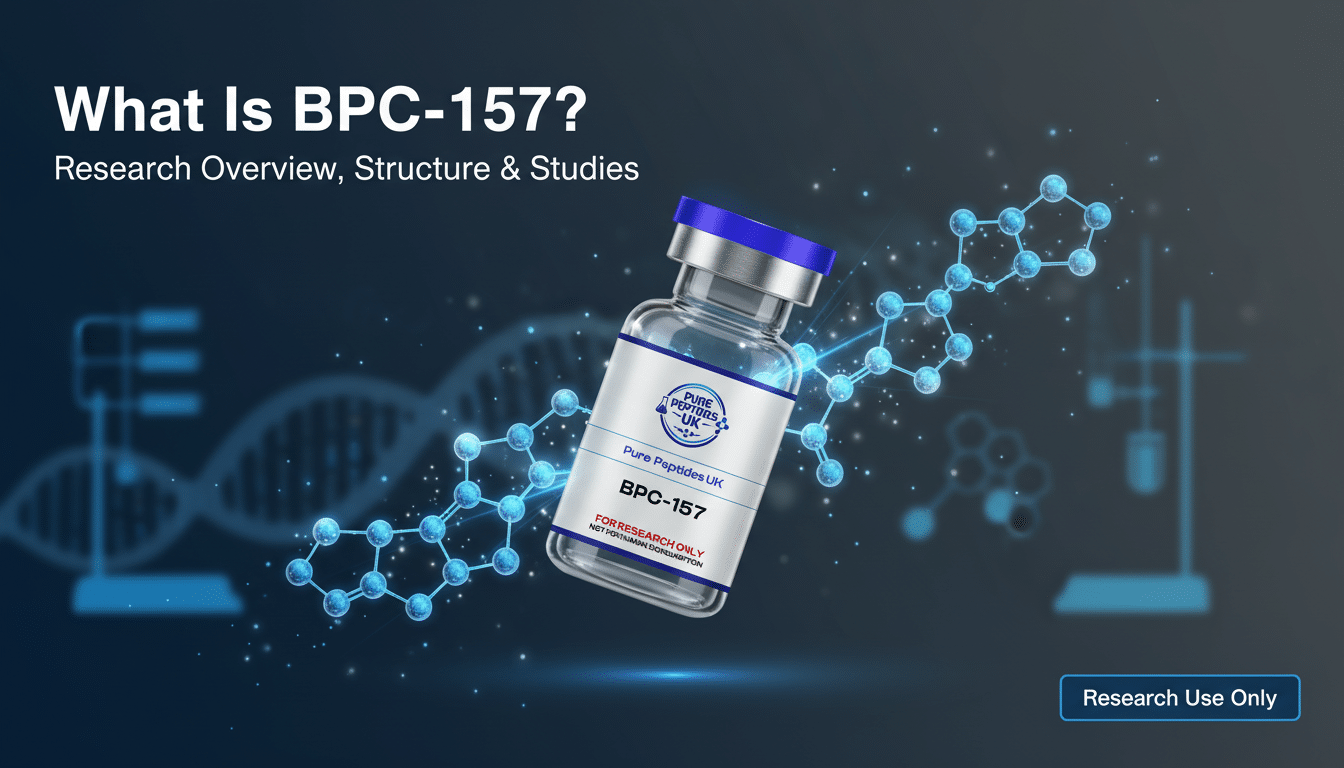
Interest in BPC-157 has grown fast in research circles, especially among labs studying peptide-based compounds and cellular processes. This synthetic peptide is often discussed for its stability and unique structure, making it a topic of ongoing scientific exploration. It’s important to note that BPC-157 is strictly for research purposes only and not for human consumption.
What Is BPC-157?
BPC-157, short for Body Protection Compound-157, is a synthetic peptide made up of 15 amino acids. It is classified as a pentadecapeptide and is commonly studied in laboratory environments. The compound is derived from a sequence found in a naturally occurring protein, but the version used in research is fully synthesized.
In scientific contexts, BPC-157 is treated as a research peptide rather than a therapeutic or medical product. Researchers explore its behavior in controlled settings to better understand how peptides interact with biological systems.
Unlike pharmaceutical-grade compounds approved for human use, BPC-157 remains in the category of experimental research materials. This means it is used in preclinical studies, often involving cell cultures or animal models, rather than clinical applications.
Chemical Structure & Key Properties
Understanding the structure of BPC-157 is key to understanding why it draws attention in research.
Molecular Composition
BPC-157 consists of a chain of 15 amino acids. This relatively short structure makes it easier to study compared to larger protein-based compounds. Its amino acid sequence contributes to its stability and resistance to rapid degradation under certain conditions.
As a synthetic peptide, BPC-157 is designed to maintain consistency across batches, which is important for controlled laboratory experiments. Researchers often focus on how its structure interacts with different biological pathways during studies.
Physical Form
In most research settings, BPC-157 is supplied as a lyophilized powder. Lyophilization is a freeze-drying process that removes moisture, helping preserve the peptide’s structure over time.
This form offers several advantages in laboratory use:
- Improved shelf life
- Easier transport and storage
- Reduced risk of degradation before use
Before being used in experiments, the peptide may be reconstituted using appropriate lab-grade solvents. However, this process is handled strictly within controlled research environments.
Stability Factors
One of the reasons BPC-157 is widely discussed in peptide research is its reported stability. Compared to many other peptides, it shows resistance to breakdown under certain laboratory conditions.
Key stability considerations include:
- Sensitivity to temperature changes
- Exposure to light
- Storage conditions before and after reconstitution
Maintaining proper conditions is essential to preserve the integrity of the compound during experiments. Even small variations can affect research outcomes.
BPC-157 Mechanism of Action (Research Context)
Researchers studying BPC-157 often focus on how it interacts with biological systems at a molecular level. While exact mechanisms are still being explored, preclinical research suggests that the peptide may interact with various signaling pathways.
Some studies have examined its relationship with processes such as angiogenesis, which refers to the formation of new blood vessels. In laboratory settings, peptides like BPC-157 are analyzed for how they influence cellular communication and response systems.
It is important to frame these findings carefully. Current insights come from preclinical and laboratory-based research, not from approved medical use. Researchers use controlled models to observe patterns, but these observations do not translate into medical claims.
Scientific discussions around BPC-157 often include:
- Cellular signaling pathways
- Interaction with growth-related processes
- Influence on experimental tissue models
These areas remain under investigation, and findings are typically presented in cautious, neutral terms.
Research Applications & Studies
BPC-157 is primarily studied in laboratory environments, where researchers examine its properties under controlled conditions. Most available data comes from preclinical studies, including in vitro (cell-based) and animal research models.
In these settings, scientists explore how peptides behave when introduced into specific biological systems. BPC-157 has been included in studies focusing on cellular response mechanisms and structural interactions within tissues.
Common research areas include:
- Laboratory-based peptide interaction studies
- Cellular response observation
- Experimental tissue models
It’s important to emphasize that these studies are designed to expand scientific understanding, not to establish medical or therapeutic outcomes. The results are used to generate hypotheses and guide further research.
Because of this, BPC-157 remains a subject of ongoing scientific interest, rather than a finalized or clinically approved compound.
Storage, Stability & Handling
Proper storage plays a critical role in maintaining the quality of research peptides like BPC-157. Since peptides can degrade under poor conditions, researchers follow strict handling protocols.
For lyophilized BPC-157, common storage practices include:
- Keeping the peptide in a cool, dry environment
- Protecting it from direct light exposure
- Avoiding temperature fluctuations
Once reconstituted, the peptide becomes more sensitive and may require refrigeration to maintain stability over shorter periods. Handling should always take place in controlled laboratory conditions to ensure consistency and reliability in research outcomes.
Maintaining peptide integrity is essential for accurate and reproducible results. Even minor deviations in storage or handling can impact experimental data.
Key Considerations When Sourcing BPC-157
Not all research peptides are created equal. When working with compounds like BPC-157, sourcing plays a major role in the reliability of research outcomes.
Researchers typically focus on a few critical factors before selecting a supplier.
Purity and Quality Standards
High-quality BPC-157 should meet strict purity standards. Impurities can interfere with experimental results and reduce consistency across studies.
Look for:
- High purity percentages (often verified through lab testing)
- Clear product specifications
- Transparent labeling
Third-Party Testing (COA)
A Certificate of Analysis (COA) is one of the most important documents when sourcing research peptides. It provides independent verification of the compound’s identity and purity.
Reliable suppliers usually make COAs easily accessible. These reports help confirm that the peptide matches its stated composition and is suitable for laboratory use.
Supplier Reputation
Consistency matters in research. Established suppliers with a strong track record are more likely to provide reliable batches over time.
When evaluating a supplier, researchers often consider:
- Transparency in sourcing and testing
- Availability of lab documentation
- Consistency in product quality
For those sourcing within the UK, platforms like Pure Peptides Lab UK focus on providing research-grade peptides that align with laboratory standards.
Is BPC-157 Legal in the UK for Research?
The legal status of BPC-157 can vary depending on how it is positioned and used. In the UK, it is generally treated as a research compound, not an approved medical product.
This means:
- It is not licensed for human or veterinary use
- It is not approved as a medicine or supplement
- It may be supplied for laboratory research purposes
Researchers and suppliers must clearly label BPC-157 as:
- For research purposes only
- Not for human consumption
Regulatory frameworks focus on preventing misuse while allowing legitimate scientific study. As a result, proper labeling and responsible handling are essential.
Anyone working with research peptides should stay informed about current UK regulations and ensure full compliance with local guidelines.
Important Disclaimer
BPC-157 is a synthetic research peptide intended strictly for scientific and laboratory use.
- It is not approved for human consumption
- It is not intended to diagnose, treat, cure, or prevent any disease
- It should only be handled by qualified professionals in controlled research environments
All information provided here is for educational and research purposes only. It reflects current understanding from preclinical studies and does not represent medical advice or clinical guidance.
Final Thoughts
BPC-157 continues to attract attention in scientific research due to its structure, stability, and interaction with biological systems in controlled studies. While early findings from laboratory models provide interesting insights, the peptide remains firmly within the category of experimental compounds.
Understanding its properties, storage requirements, and sourcing considerations is essential for anyone working in a research setting. Maintaining strict compliance and a neutral, evidence-based approach ensures that studies remain credible and aligned with scientific standards.
For those seeking consistent, research-grade peptides in the UK, British Peptides UK (britishpeptides.io) offers a platform focused on quality, transparency, and laboratory use standards.
FAQs
What is BPC-157 used for in research?
BPC-157 is studied in laboratory settings to observe how peptides interact with biological systems. Researchers often examine its role in cellular processes and experimental models.
Is BPC-157 safe for human use?
BPC-157 is not approved for human use. It is strictly intended for research purposes only and should not be used outside controlled laboratory environments.
How does BPC-157 work in studies?
Preclinical studies suggest that BPC-157 may interact with signaling pathways and cellular response mechanisms. These findings are limited to laboratory research and are not considered medical evidence.
Is BPC-157 legal in the UK?
BPC-157 can be legally supplied in the UK for research purposes. However, it is not approved as a medicine or supplement and must not be used for human consumption.
How should BPC-157 be stored in a lab?
BPC-157 is typically stored in a cool, dry environment away from light. Once reconstituted, it may require refrigeration to maintain stability for short-term research use.